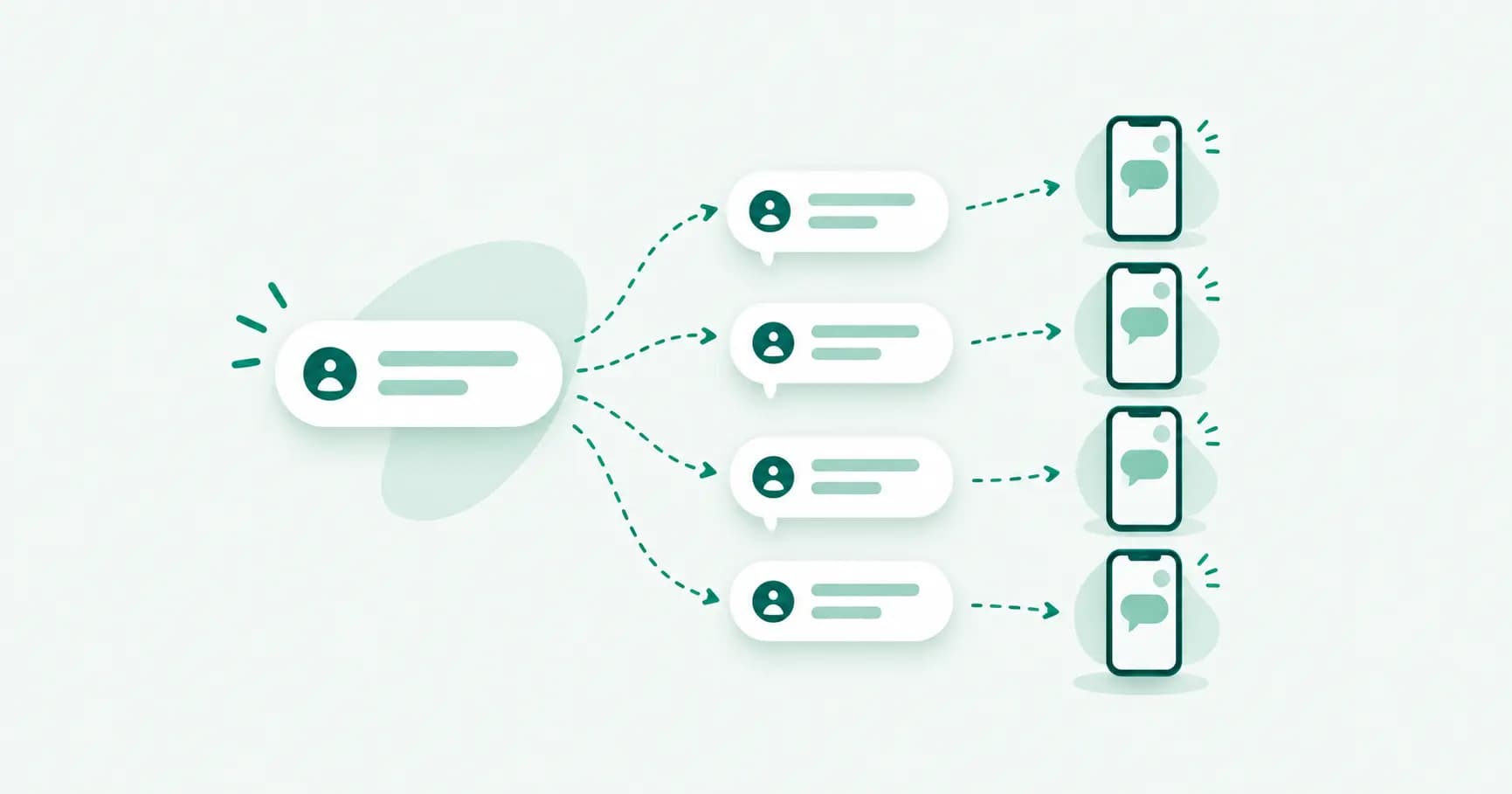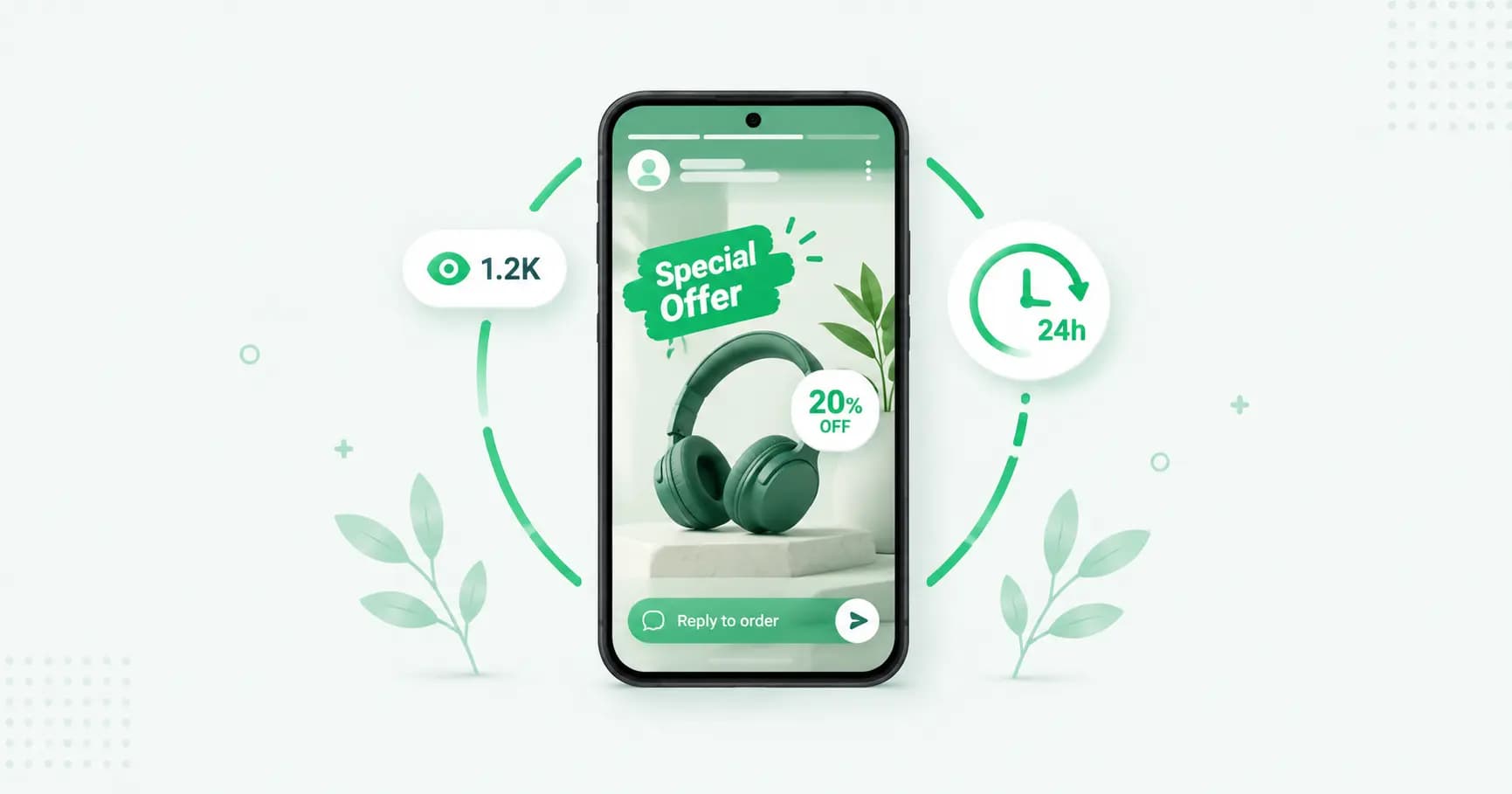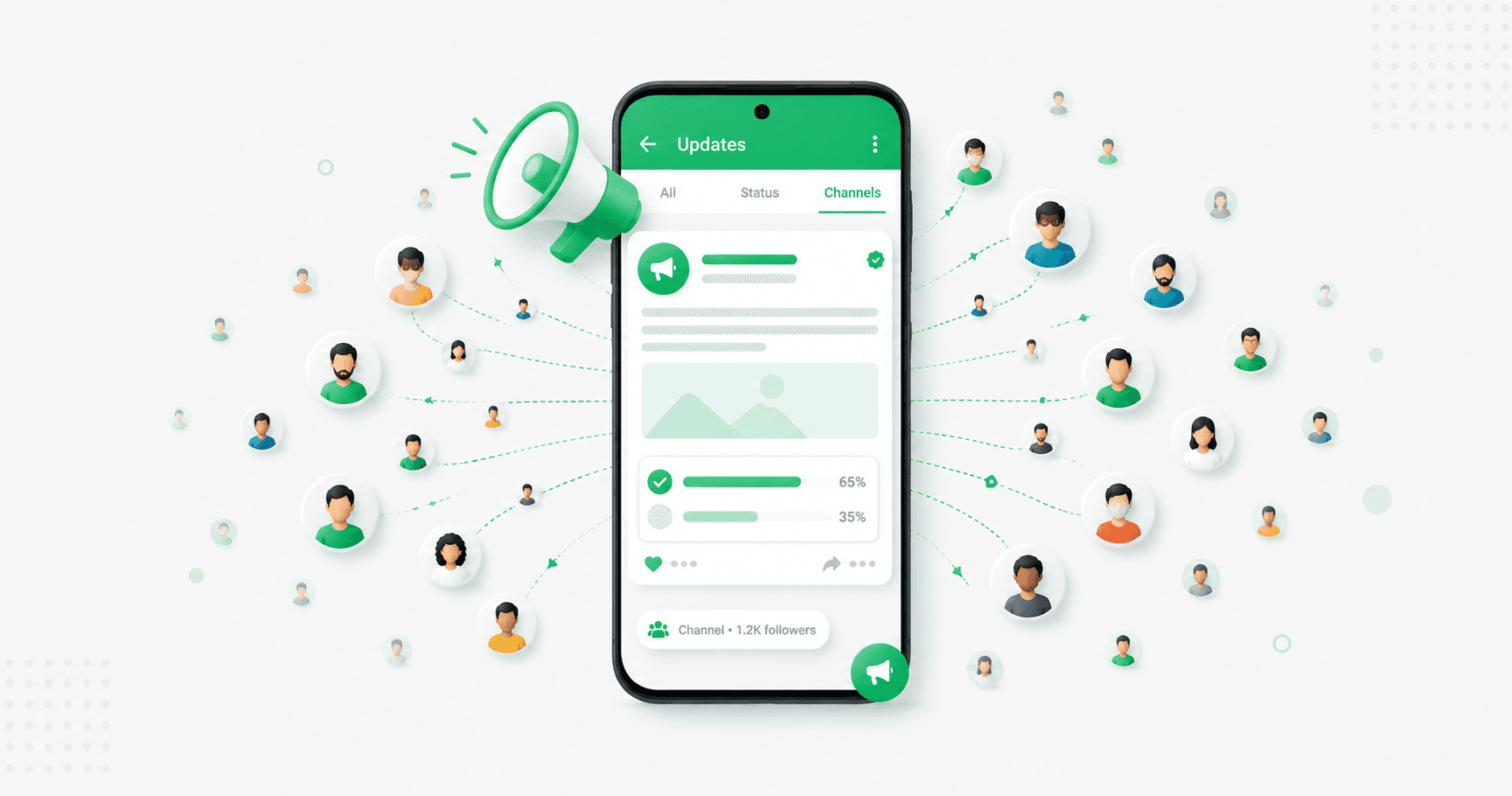
WhatsApp is where Indian customers already spend their day — more than 500 million people in India use it, and they open messages in a way they never open email. That makes it the most powerful marketing channel most businesses have. It also makes it the easiest one to ruin: send too much, too generic, and customers block you, your quality rating drops and your reach disappears.
This playbook walks through a complete WhatsApp marketing strategy for 2026, from building an audience to measuring revenue.
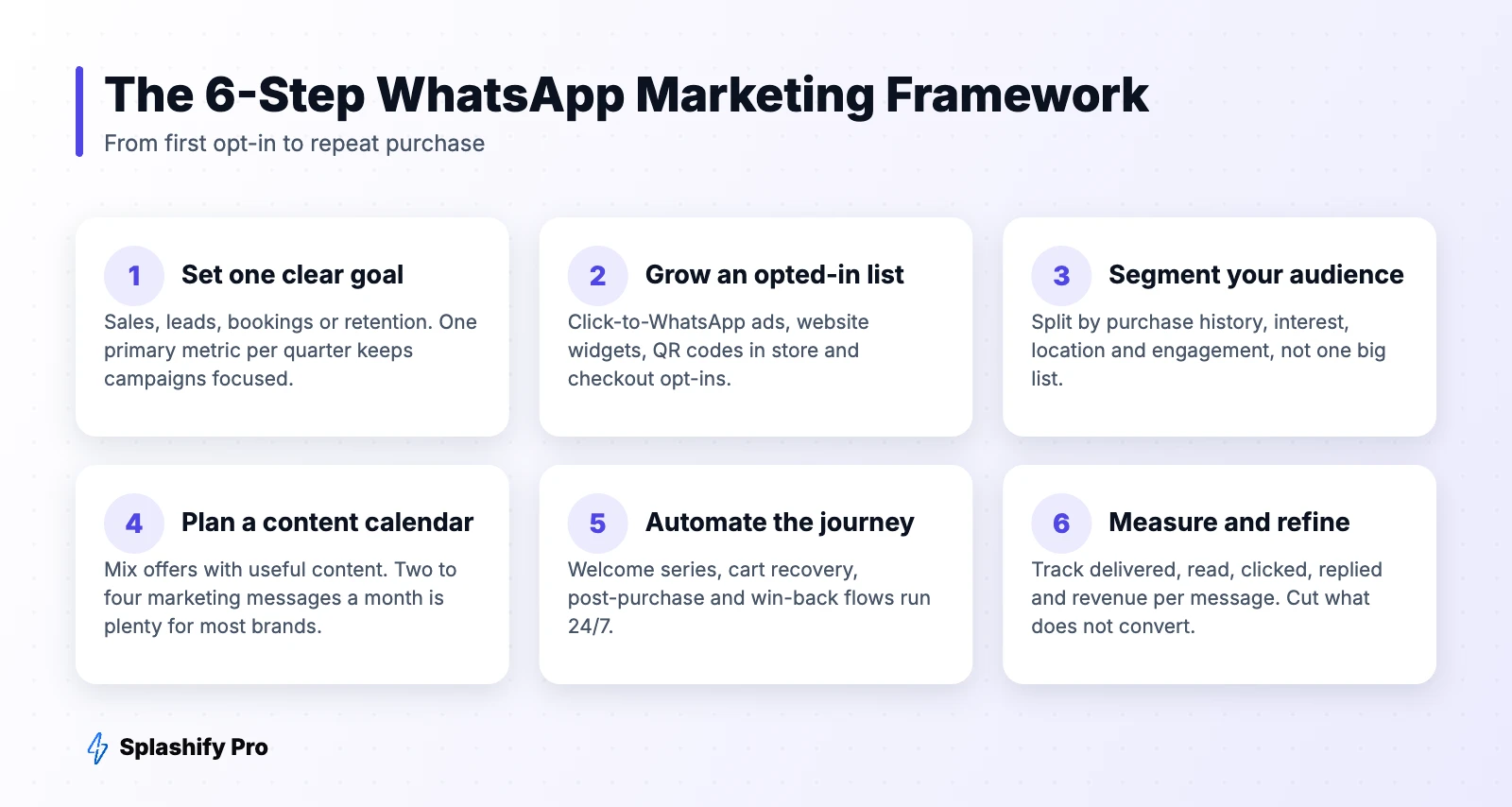
Step 1: Decide what WhatsApp is for
Start with one primary goal for the quarter. The most common ones are:
- Direct sales — offers, launches and cart recovery for D2C and retail.
- Lead generation — capturing and qualifying enquiries for real estate, education, finance and B2B.
- Bookings — appointments for clinics, salons, gyms and services.
- Retention — reorders, renewals and loyalty for subscription and repeat-purchase businesses.
Your goal decides your templates, your automations and the metric you report on. Trying to do everything at once is how WhatsApp turns into noise.
Step 2: Build an opted-in audience
Meta requires that customers opt in before you send them business-initiated messages, and opted-in audiences simply perform better. The best list-building channels are:
- Click-to-WhatsApp ads on Facebook and Instagram, which open a chat directly. Conversations that start from these ads also get a 72-hour free messaging window.
- A WhatsApp chat widget or wa.me link on your website and social bios.
- QR codes on packaging, receipts, store counters and event standees.
- Checkout and form opt-ins — a clearly worded checkbox like “Get order updates and offers on WhatsApp”.
Step 3: Segment before you send
One message to your entire list is the fastest route to blocks. Segment by:
- Purchase behaviour — new, repeat, lapsed, high-value
- Interest — the category or product they browsed or asked about
- Location and language — Hindi, Bengali, Tamil and other regional language messages often outperform English
- Engagement — people who read and click versus people who never open
Step 4: Plan a content mix customers welcome
A good rule is that at least half of what you send should be useful rather than promotional. Example monthly calendar for a D2C brand:
| Week | Message | Type |
|---|---|---|
| Week 1 | New collection launch with carousel | Marketing |
| Week 2 | Styling tips or how-to video | Marketing (content) |
| Week 3 | Members-only early access offer to top customers | Marketing |
| Ongoing | Order, delivery and feedback messages | Utility |
Festive peaks are the exception — around Diwali, customers expect more offers, so you can raise frequency for engaged segments.
Step 5: Automate the customer journey
Broadcasts get attention, but automations make most of the money because they fire at exactly the right moment. Set these up first:
- Welcome flow — greet new opt-ins, share what to expect and offer a first-order incentive.
- Abandoned cart recovery — a reminder within an hour, then a second nudge the next day.
- Post-purchase — confirmation, shipping updates, how-to-use content and a review request.
- Win-back — a personal offer for customers who have not bought in 60–90 days.
- Lead qualification chatbot — asks budget, timeline and requirement, then routes hot leads to sales.
You can build all of these without code using a WhatsApp chatbot and journey builder.
Step 6: Protect your quality rating
Meta tracks how users react to your messages. Blocks and reports lower your quality rating, which affects how quickly your messaging limit grows. To stay healthy:
- Message only opted-in customers and honour opt-outs immediately.
- Personalise with names and relevant products.
- Keep messages short with one clear call to action.
- Watch per-template read and block rates and pause anything underperforming.
Step 7: Measure what matters
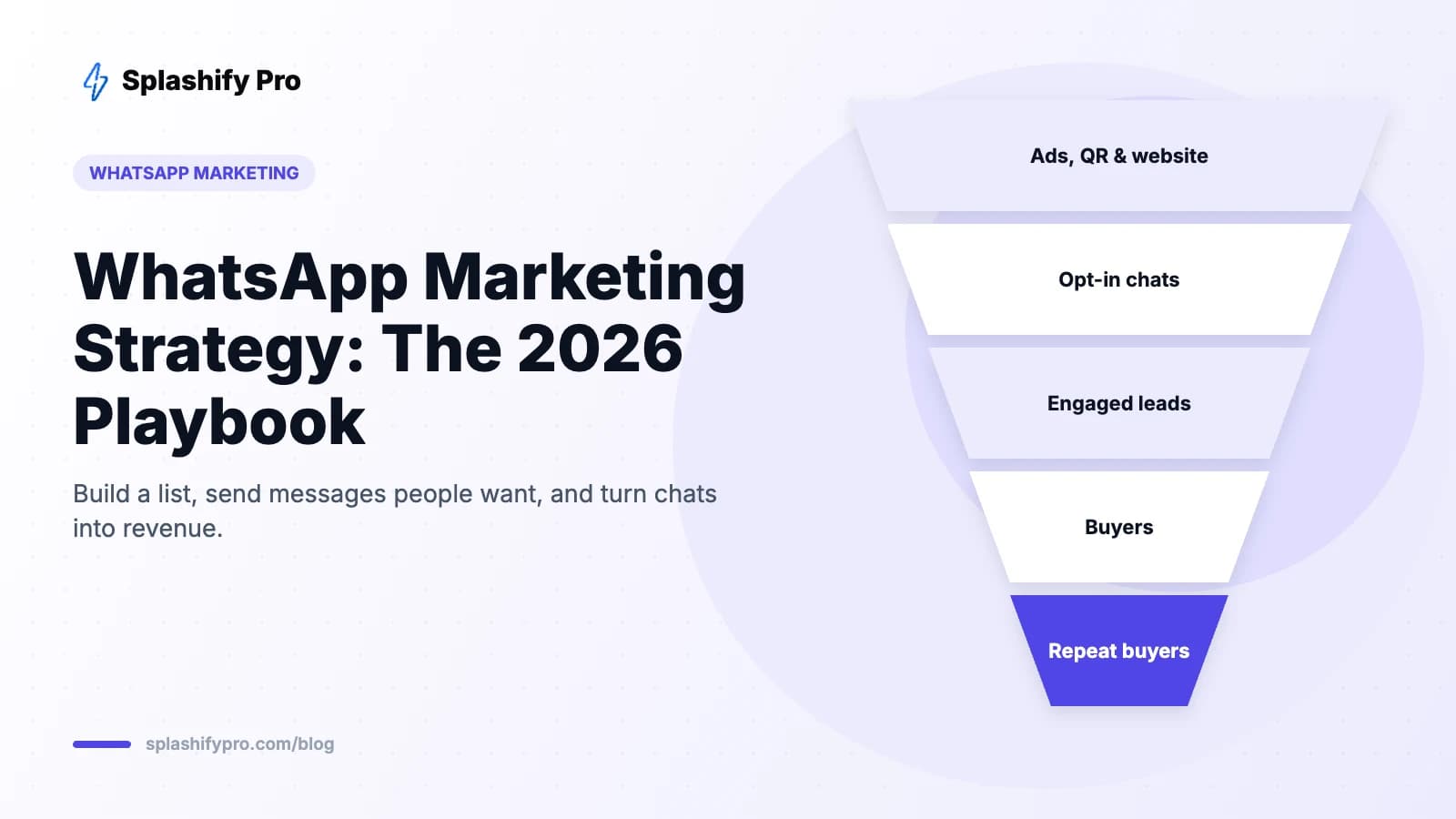
Track the full funnel for every campaign: sent → delivered → read → clicked → replied → converted. The metrics that matter most are click-through rate, reply rate, revenue per message and cost per conversion. Compare them against email and SMS and you will usually see why businesses keep shifting budget to WhatsApp.
Common mistakes to avoid
- Buying or scraping contact lists — it violates policy and destroys your quality rating.
- Using a personal or unofficial bulk sender, which risks a ban. See how bans happen.
- Sending the same message to everyone at the same time.
- Ignoring replies — a broadcast that gets answers needs people or a bot ready to respond.
Frequently asked questions
How often should I send WhatsApp marketing messages?
For most brands, two to four marketing messages a month per customer is a safe range, with transactional messages on top. Highly engaged segments can receive more during sales.
Is WhatsApp marketing legal in India?
Yes, when you use the official WhatsApp Business Platform, collect opt-in and follow Meta's policies. Keep a record of how and when each customer opted in.
What does WhatsApp marketing cost?
Meta charges per delivered template message, with marketing messages priced higher than utility and authentication. See our pricing calculator to estimate your spend.
The bottom line
A winning WhatsApp marketing strategy is simple: earn the opt-in, segment carefully, send fewer but better messages, automate the moments that matter and measure revenue rather than reach. Start free with Splashify Pro to put the whole playbook into action.
- #whatsapp business marketing
- #whatsapp marketing
- #whatsapp marketing india
- #whatsapp marketing strategy