
RCS messaging is the modern replacement for SMS — the plain text messages you've sent for years, upgraded with images, buttons, branding and read receipts, all inside your phone's default messaging app. After years of slow adoption, RCS has gone mainstream: there are now over 2.5 billion monthly active RCS users worldwide, every major Indian telecom operator supports it, and even Apple has adopted it on the iPhone.
This guide explains what RCS messaging is, how it works, how it compares to SMS and WhatsApp, whether it's encrypted, and how Indian businesses are using it in 2026.
What is RCS messaging?
RCS stands for Rich Communication Services. It's an open messaging standard developed by the GSMA (the global body for mobile operators) to replace SMS with a richer, app-like experience — without needing to download a separate app.
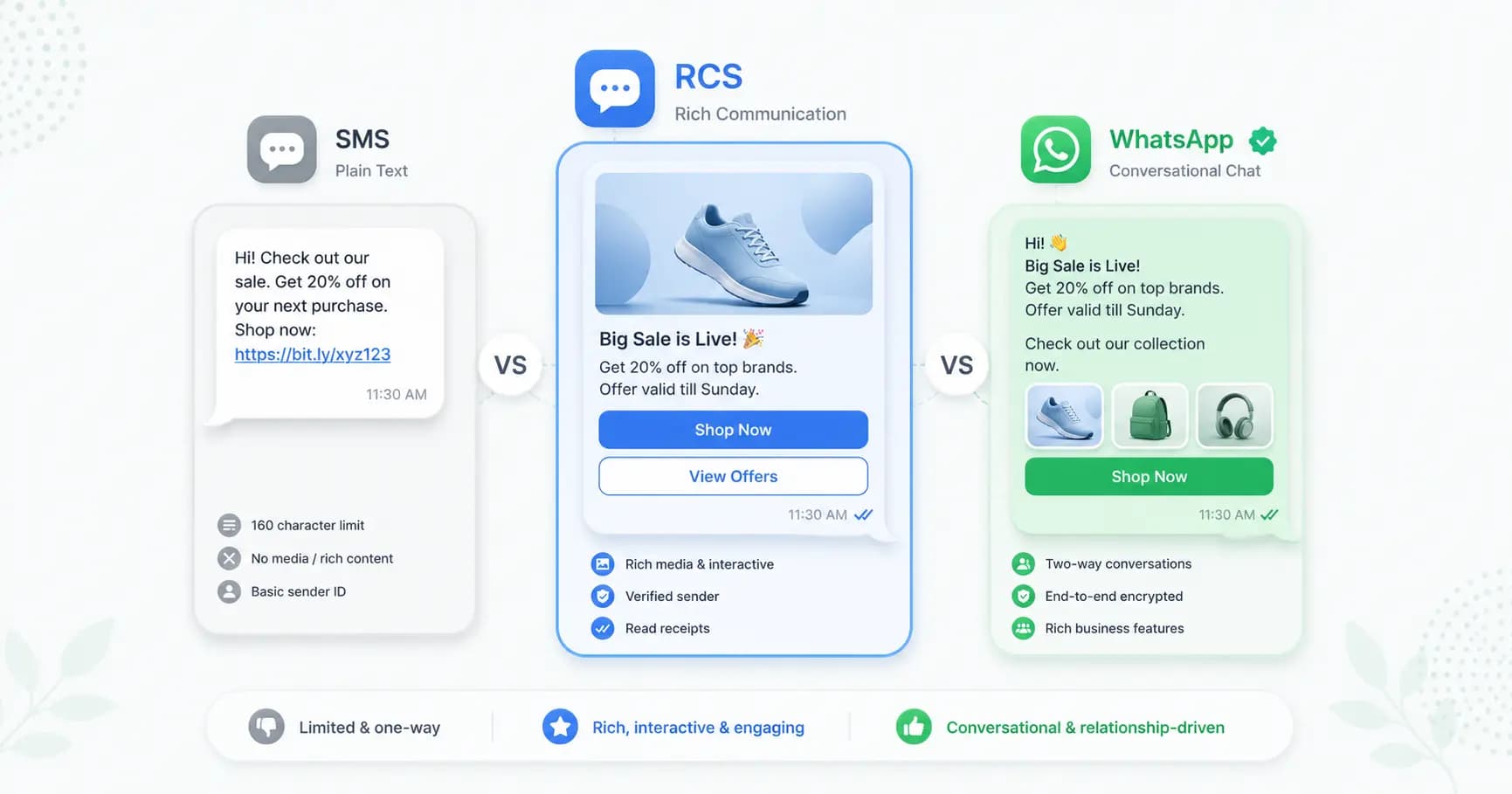
Where SMS is limited to 160 characters of plain text, RCS lets you send high-resolution photos and videos, see typing indicators and read receipts, use interactive buttons and carousels, and — for businesses — show a verified brand name and logo. It all happens inside the native messaging app that's already on the phone (Google Messages on Android, the Messages app on iPhone).
In short: RCS is SMS supercharged with the features people expect from WhatsApp and iMessage.
How does RCS work?
RCS runs over the internet (Wi-Fi or mobile data) rather than the old SMS network, using a specification called the RCS Universal Profile so it works consistently across carriers and devices. It's delivered through mobile operators, with Google's Jibe platform powering RCS for many carriers worldwide, including in India.
One of RCS's most important features for businesses is automatic SMS fallback: if a recipient's device or network doesn't support RCS, the message is delivered as a normal SMS instead — so it always gets through.
Key features of RCS messaging
RCS brings SMS up to modern standards with:
- High-resolution media — send clear photos, videos, GIFs and audio (no more compressed SMS images).
- Read receipts and typing indicators — see when a message is delivered, read, and when someone's replying.
- Interactive buttons — "suggested replies" and "suggested actions" let people tap to call, open a link, share location, or book — right inside the chat.
- Rich cards and carousels — show products, offers or articles as swipeable visual cards with images and CTAs.
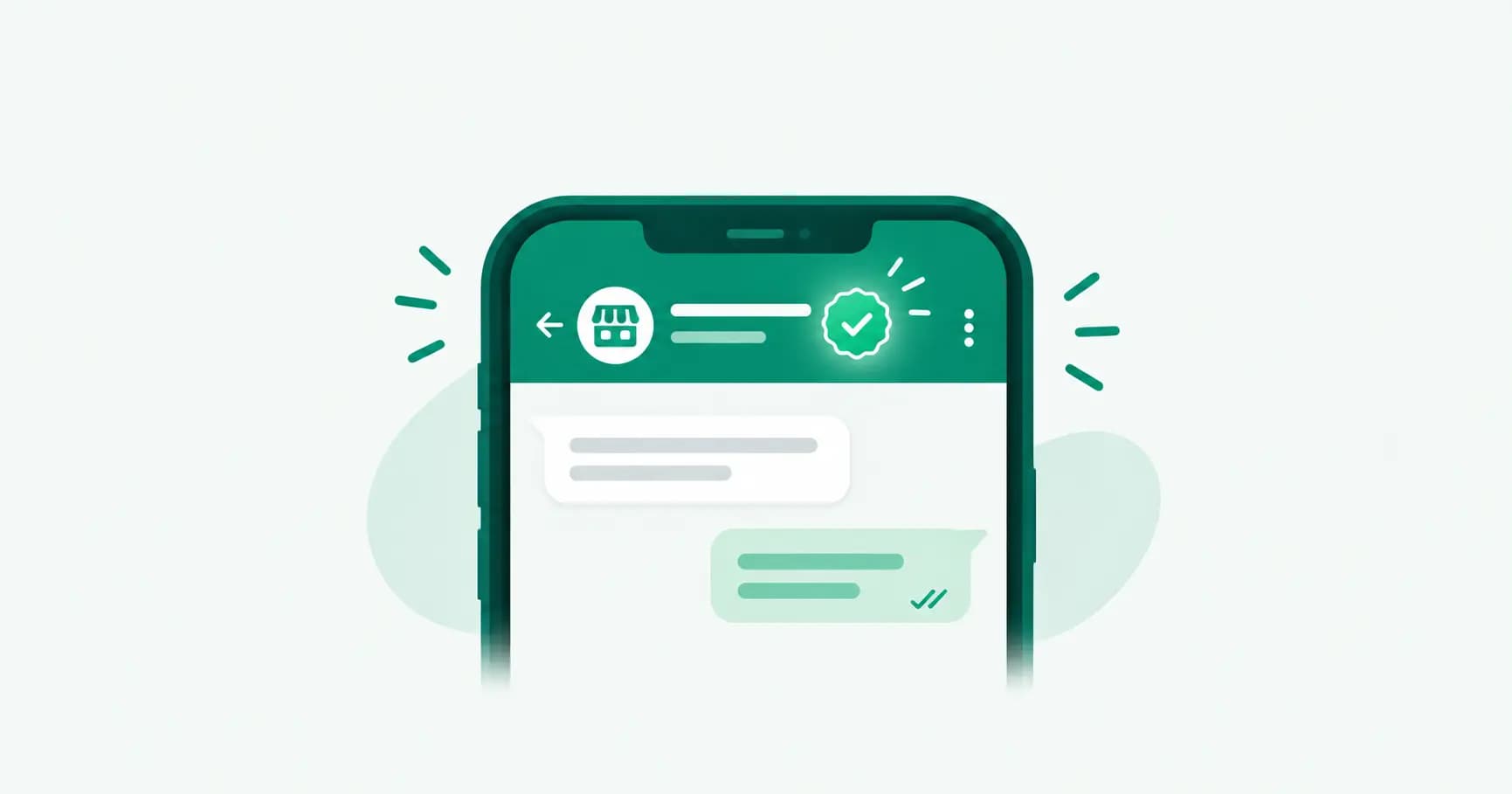
- Verified sender branding (for businesses) — your brand name, logo and a verified checkmark appear at the top of the chat, so customers know it's really you.
- Group chats — RCS supports group conversations with rich features for up to 100 participants.
RCS vs SMS: what's the difference?
SMS and RCS both arrive in the same messaging inbox, but they're very different:
- Content: SMS is plain text (160 characters). RCS supports images, video, buttons, carousels and branding.
- Engagement: RCS messages look like rich app messages, driving far higher click-through and engagement than plain SMS.
- Trust: SMS shows just a number or sender ID. RCS shows a verified brand name and logo.
- Feedback: SMS gives basic delivery info; RCS gives delivery and read receipts.
- Reach: SMS reaches 100% of phones, including feature phones. RCS needs an RCS-capable smartphone (with SMS fallback covering the rest).
- Cost: SMS is cheaper per message; RCS costs more but typically returns far more engagement per rupee.
The takeaway: RCS does everything SMS does, plus far more — while keeping SMS as a safety net for devices that can't receive it.
RCS vs WhatsApp: which is better?
This is the question most businesses ask, and the honest answer is that they're complementary, not interchangeable:
- Reach: RCS reaches Android's native inbox with no app download and no opt-in beyond the carrier subscription — in India that's 450M+ devices. WhatsApp reaches both Android and iPhone, but only users who have the app and have opted in to hear from you.
- Platform: RCS is strongest on Android (with growing iPhone support); WhatsApp is fully cross-platform.
- Conversations: WhatsApp is built for rich two-way conversations, support and chatbots. RCS is excellent for branded, interactive campaign and transactional messages.
- Opt-in: WhatsApp requires explicit opt-in; RCS business messaging has lower opt-in friction.
Many businesses run both: WhatsApp for conversational support and global reach, RCS for high-impact, branded campaigns to Android users. (See our guide to the WhatsApp Business API if conversational messaging is your priority.)
Does RCS work on iPhone?
Yes. Apple added RCS support to the iPhone in iOS 18 (2024), finally bringing better media quality, read receipts and typing indicators to messages between iPhone and Android — replacing the old, limited SMS experience.
In iOS 26.5 (May 2026), Apple went further and began rolling out end-to-end encryption for RCS chats between iPhone and Android, switched on by default (you'll see a lock icon when a chat is encrypted). RCS support on iPhone depends on the carrier, so availability varies by network and region.
Is RCS encrypted?
For personal (person-to-person) chats, increasingly yes. End-to-end encryption (E2EE) was standardised in RCS Universal Profile 3.0 (March 2025) and is now rolling out across Google Messages and Apple's Messages app, so one-to-one RCS conversations between Android and iPhone can be encrypted by default.
For business messaging, the model is different: the primary trust signal is the verified sender profile (the brand's verified name, logo and checkmark) rather than E2EE. That verification is what stops scammers from impersonating brands — a major advantage over spoofable SMS sender IDs.
RCS in India: carriers, reach and cost
India is one of the most important RCS markets in the world, and 2026 is its breakout year:
- All three major operators — Reliance Jio, Bharti Airtel and Vodafone Idea (Vi) — fully support RCS Business Messaging through Google's Jibe platform, with BSNL planning to follow.
- With 95% of Indian smartphones running Android and 450M+ RCS-eligible devices, RCS can reach almost the entire smartphone population — natively, with no app download.
- Pricing isn't regulated the way SMS is. Rates vary by operator and provider, but typical Indian RCS rates run roughly ₹0.18–₹0.30 per message for basic and rich messages, with conversational sessions priced higher. RCS costs more than SMS but usually delivers much higher engagement.
- Commercial RCS in India still requires TRAI DLT registration, Google brand verification, and SMS fallback — all standard parts of setting up a campaign.
What is RCS Business Messaging (RBM)?
RCS Business Messaging is the business-to-consumer version of RCS — how brands send verified, interactive, branded messages to customers. Instead of an anonymous SMS, customers receive a message with your verified brand name, logo and a checkmark, plus rich content and tappable buttons.
Because the sender is verified by Google, RBM builds far more trust than SMS and is much harder to spoof — which is why banks, e-commerce brands and service businesses are adopting it.
RCS for business: top use cases
Indian businesses are using RCS for:
- Product carousels with images and "Buy Now" buttons.
- Abandoned cart recovery with the product image and a one-tap return-to-cart link.
- Order and delivery updates with live tracking buttons.
- Branded promotions with images, offers and quick-reply CTAs.
- OTPs and transactional alerts — but branded and verified, not plain text.
- Appointment booking and reminders with tap-to-confirm actions.
Across these, RCS consistently drives higher click-through and conversion than plain SMS, thanks to the visuals and interactivity.
RCS vs SMS vs WhatsApp: which should you use?
You don't have to pick just one — the strongest strategies use all three for what each does best:
- SMS — universal reach (every phone, including feature phones and rural areas) for critical OTPs and alerts.
- RCS — branded, visual, interactive campaigns and transactional messages to Android users, with SMS fallback.
- WhatsApp — conversational support, chatbots and two-way engagement across both Android and iPhone.
A platform like Splashify Pro lets you run RCS, WhatsApp and SMS from one place, so you can match the channel to the message.
How to turn on RCS on your phone
On Android (Google Messages):
- Open Google Messages.
- Tap your profile icon → Messages settings → RCS chats (or "Chat features").
- Toggle Turn on RCS chats and verify your number.
On iPhone (iOS 18 or later):
- Open Settings.
- Go to Apps → Messages (or Settings → Messages).
- Toggle RCS Messaging on (this requires carrier support).
Frequently asked questions
What does RCS stand for?
RCS stands for Rich Communication Services — an open messaging standard from the GSMA that upgrades SMS with rich media, interactive features and branding.
Is RCS the same as SMS?
No. RCS arrives in the same messaging inbox but supports images, video, buttons, carousels, branding and read receipts, while SMS is limited to plain text. RCS falls back to SMS when a device doesn't support it.
Does RCS work on iPhone?
Yes. Apple added RCS in iOS 18 (2024), and iOS 26.5 (2026) added end-to-end encryption for RCS chats between iPhone and Android. RCS support on iPhone depends on your carrier.
Is RCS free?
For personal messaging, RCS is free over Wi-Fi or your data plan, just like other internet messaging. For businesses, RCS Business Messaging is a paid channel charged per message (roughly ₹0.18–₹0.30 in India, depending on the operator and message type).
Is RCS encrypted?
Personal one-to-one RCS chats are increasingly end-to-end encrypted by default (standardised in Universal Profile 3.0 and rolling out on Google Messages and iPhone). For business messages, trust comes from the verified sender profile rather than end-to-end encryption.
What's the difference between RCS and WhatsApp?
RCS works inside the phone's native messaging app with no app download or opt-in friction, and is strongest on Android. WhatsApp is a separate app, fully cross-platform, and built for two-way conversations — but it requires the app and explicit opt-in. Many businesses use both.
Do I need an app to use RCS?
No. RCS is built into the default messaging app (Google Messages on Android, Messages on iPhone), so there's nothing extra to install.
Does RCS work in India?
Yes. Jio, Airtel and Vi all support RCS Business Messaging through Google's Jibe platform, reaching 450M+ RCS-capable Android devices, with SMS fallback for the rest.
The bottom line
RCS messaging is the long-overdue upgrade to SMS — bringing rich media, branding, interactivity and verified trust to the messaging inbox almost everyone already uses. With 2.5 billion users worldwide, full carrier support in India, and Apple now on board, RCS has become a core business messaging channel rather than a future promise.
If you want to reach Android customers with verified, interactive, branded messages — alongside WhatsApp and SMS — explore RCS messaging with Splashify Pro, or start a free trial.
- #rcs business messaging india
- #rcs messaging
- #rcs vs sms
- #rcs vs whatsapp
- #rich communication services
- #what is rcs